Why Destin Hall and Other Lawmakers Are Focused on the State Budget
What North Carolina’s Budget Fight Means in 2026
By Eric Stevenson
North Carolina lawmakers returned to Raleigh this month facing an unfinished job that affects nearly every corner of state government: passing a budget. The 2026 short session began without a new full budget in place, leaving major questions unresolved about Medicaid, teacher pay, taxes and other state spending priorities. That delay matters because the budget determines how North Carolina funds public schools, health care, law enforcement and disaster recovery. Speaker Destin Hall said in a recent interview that House leaders want “not just getting a budget done, but getting the right budget done, one that’s fiscally responsible.” His comments highlight how budget negotiations are about more than timing; they are also about what lawmakers believe the state should prioritize.
Why the budget is still unfinished
North Carolina’s short session usually focuses on adjustments to a budget already in place, but this year lawmakers returned with larger fiscal disputes still unresolved. Recent reporting shows legislative leaders came back to session with budget negotiations still dominating the agenda. The disagreements include how fast to continue cutting income taxes, how much to spend on employee raises and how to handle major programs such as Medicaid. Gov. Josh Stein has also put forward his own budget recommendations, adding another layer to the debate between the governor, the House and the Senate.
What Destin Hall says House Republicans want
In his interview with Carolina Journal, Hall said the House wants a budget that is fiscally responsible while still addressing inflation and compensation. He pointed to meaningful raises for teachers, state employees, troopers and law enforcement, and said lawmakers also want to continue reducing income tax rates at what he described as a responsible pace. Hall also emphasized property tax relief as a major issue, including support for a constitutional amendment aimed at limiting how much property tax levies can rise. Those comments place Hall in the middle of the broader Republican argument that the state can balance taxpayer relief with targeted spending on core services. His remarks also show how budget talks are tied to other major policy issues, not just overall dollar amounts.
Why Medicaid is such a major pressure point
Medicaid has become one of the most urgent parts of North Carolina’s budget debate. Gov. Stein’s budget proposal called for $319 million to fully fund Medicaid, and multiple news reports said lawmakers were moving toward approving that amount even while larger budget talks continued. Stein’s office says Medicaid covers more than 3 million North Carolinians, including children, seniors, people with disabilities and working families. Hall said in his interview that Republicans want Medicaid available as a safety net while also increasing oversight to reduce fraud, waste and abuse. That makes Medicaid both a spending issue and a policy issue in the current session.
North Carolina’s budget fight is more than a partisan disagreement. It will shape decisions about taxes, teacher pay, Medicaid and the state’s overall fiscal direction. Readers who want to follow the issue can track updates through the North Carolina General Assembly’s website, the governor’s budget office and ongoing reporting from state news outlets as negotiations continue through the short session.
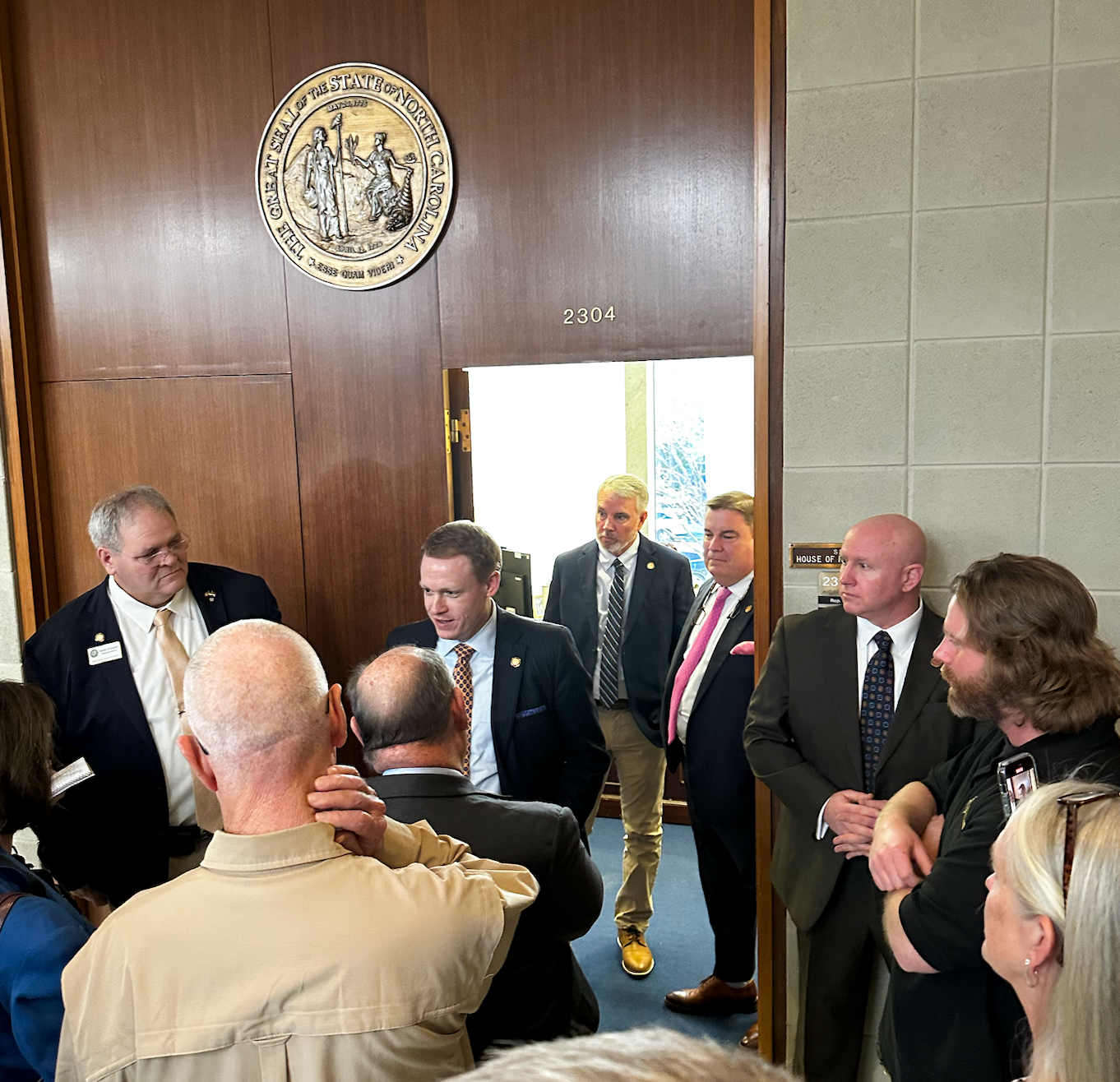
Destin Hall talking with citizens.
Photo taken by Eric Stevenson
